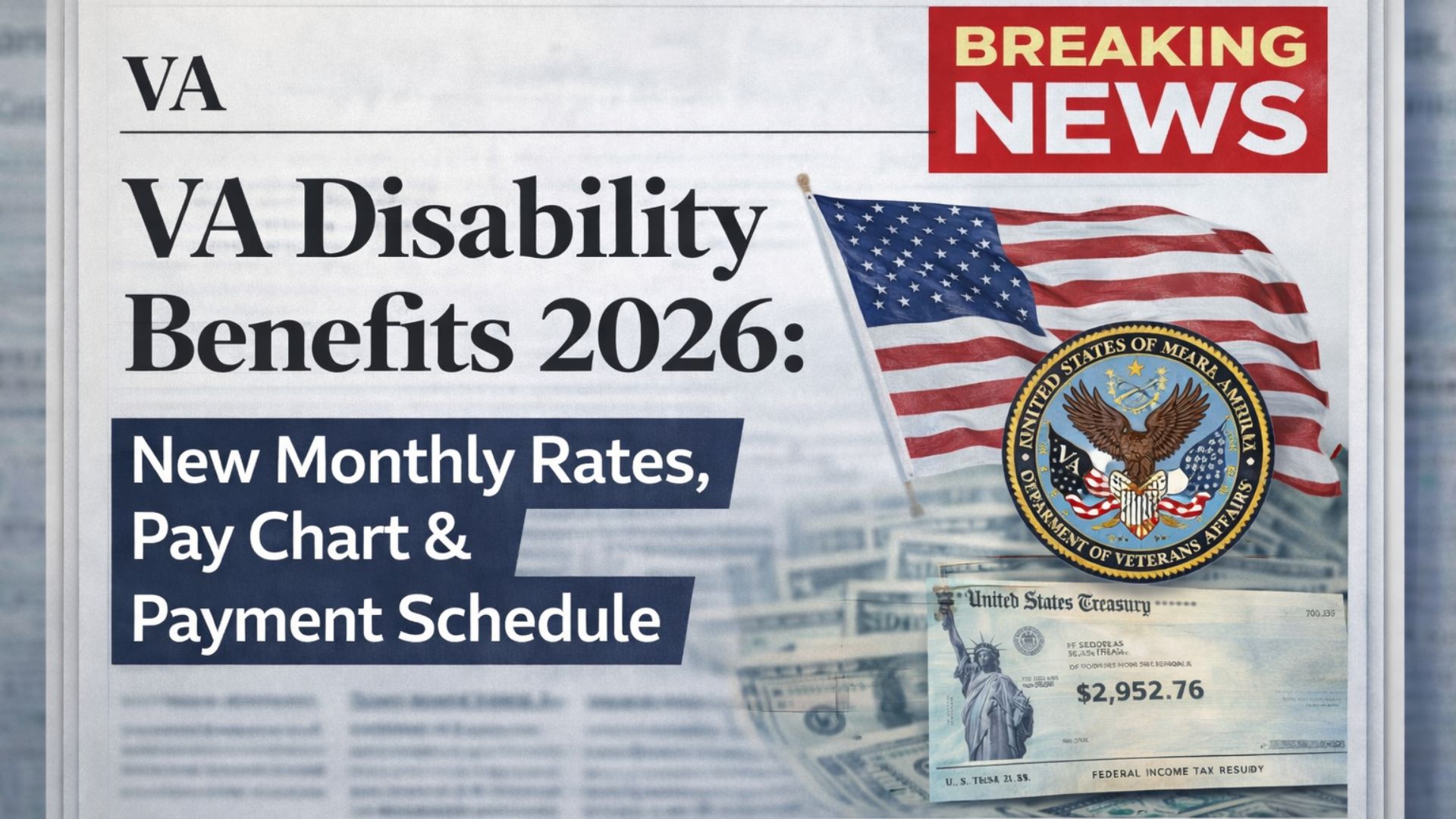
The U.S. Department of Veterans Affairs has announced updated VA Disability Compensation rates for 2026, bringing a financial adjustment for millions of veterans across the country. These payments play a vital role in helping veterans manage daily expenses, medical needs, and long-term financial stability. With the cost of living continuing to rise, even small increases in monthly benefits can make a meaningful difference for households that depend on this support.
What VA Disability Compensation Means
VA Disability Compensation is a tax-free monthly payment provided to veterans who have disabilities connected to their military service. The payment amount is based on the severity of the disability, which is rated on a scale from 10 percent to 100 percent. Unlike many other assistance programs, these benefits are not based on income. This ensures that compensation reflects how much a disability affects a veteran’s ability to work and live independently.
Eligibility for VA Disability Benefits
To qualify, a veteran must have served on active duty, active duty for training, or inactive duty training. The disability must be medically proven and directly linked to military service. Veterans must file a claim and receive an official disability rating from the VA. Proper service records and medical documentation are essential. Veterans discharged dishonorably are not eligible, which makes accurate service verification important.

2026 VA Disability Pay Rates Explained
For 2026, VA disability payments have been adjusted to reflect cost-of-living changes. Veterans with a 10 percent disability rating can expect to receive about $175 per month. Those rated at 50 percent may receive around $1,100 each month. Veterans with a 100 percent disability rating could receive more than $3,900 per month. Veterans with dependents may qualify for additional amounts, depending on their rating and family situation.
Monthly Payment Schedule for 2026
VA disability payments are issued once a month, usually near the end of the month. For example, January payments are scheduled for January 30, February payments for February 27, and March payments for March 31. If a payment date falls on a weekend or federal holiday, the payment is typically issued earlier. Knowing these dates helps veterans plan rent, medical expenses, and other bills.
How Veterans Receive Their Payments
Most veterans receive benefits through direct deposit, which is the fastest and safest option. Paper checks are still available but may take longer to arrive. Veterans are encouraged to keep their banking and address information updated to avoid delays. Errors in account details are one of the most common reasons payments are held up.
यह भी पढ़े:
 IRS Confirms $2,000 Direct Deposit for January 2026 : Know Your Payment Dates and Eligibility Guide
Managing Benefits and Planning Ahead
Veterans can review and manage their benefits online through the official VA website. Checking payment amounts regularly helps ensure accuracy and allows veterans to quickly spot changes. While the 2026 increase offers some relief, many veterans continue to carefully budget to keep up with rising costs.
Disclaimer:
This article is for informational purposes only. VA disability rates, payment schedules, and cost-of-living adjustments may change based on official government decisions. Readers should verify current details through the official VA website or local VA offices. This content does not provide legal, financial, or personal advice.